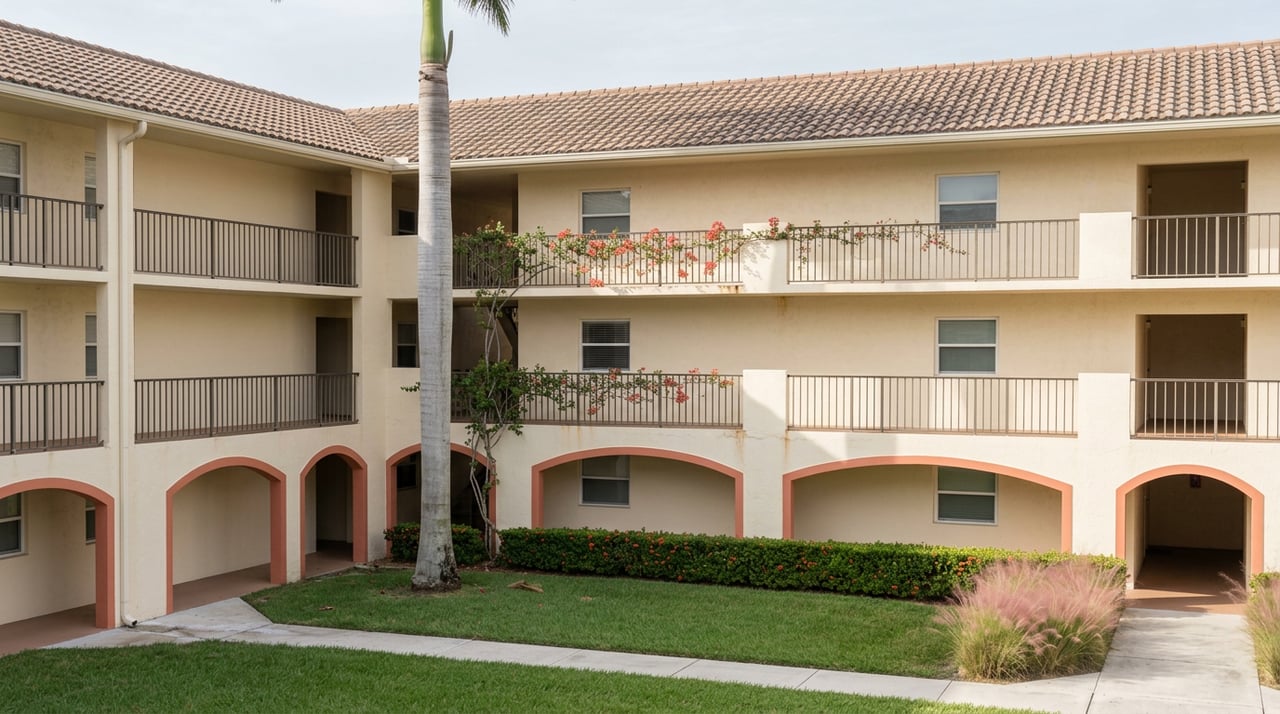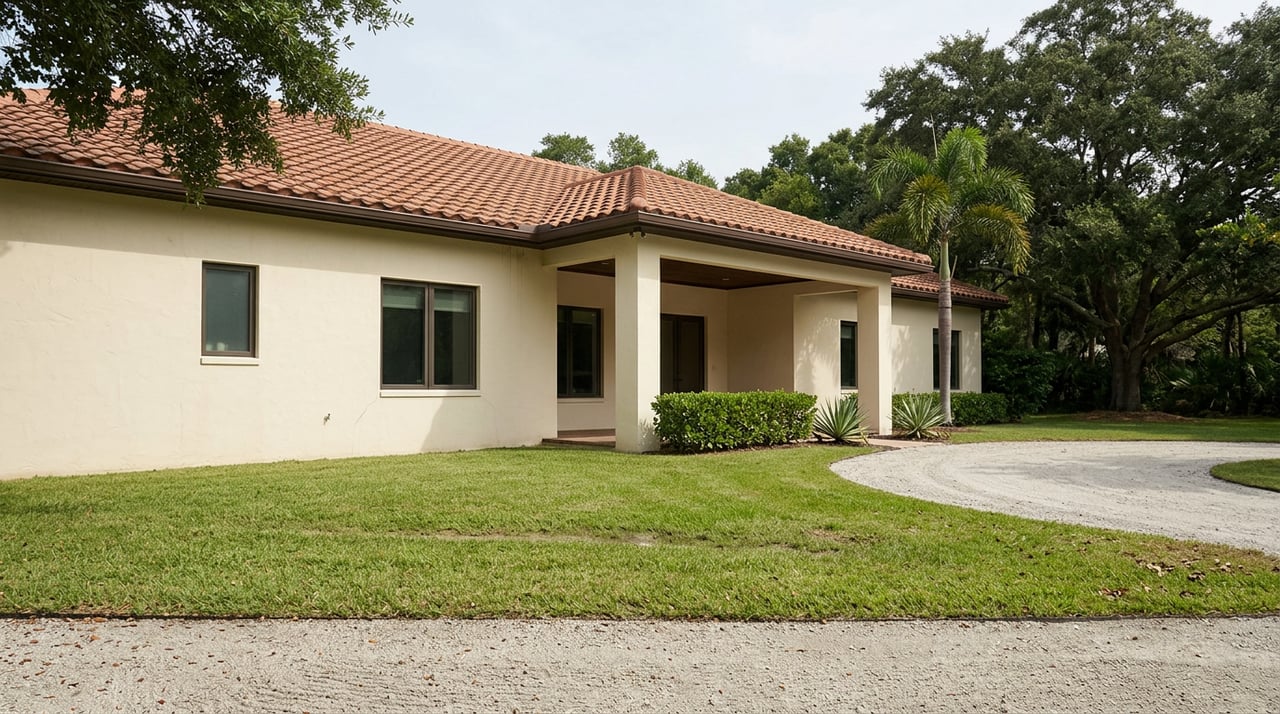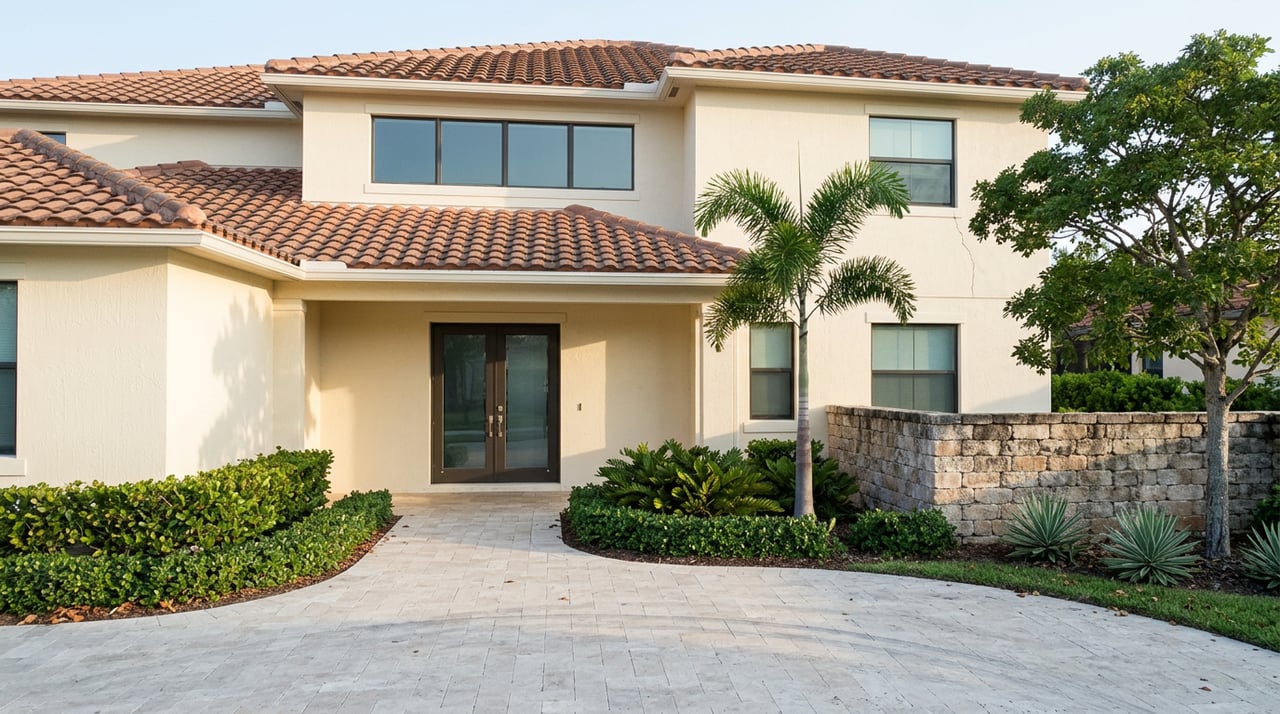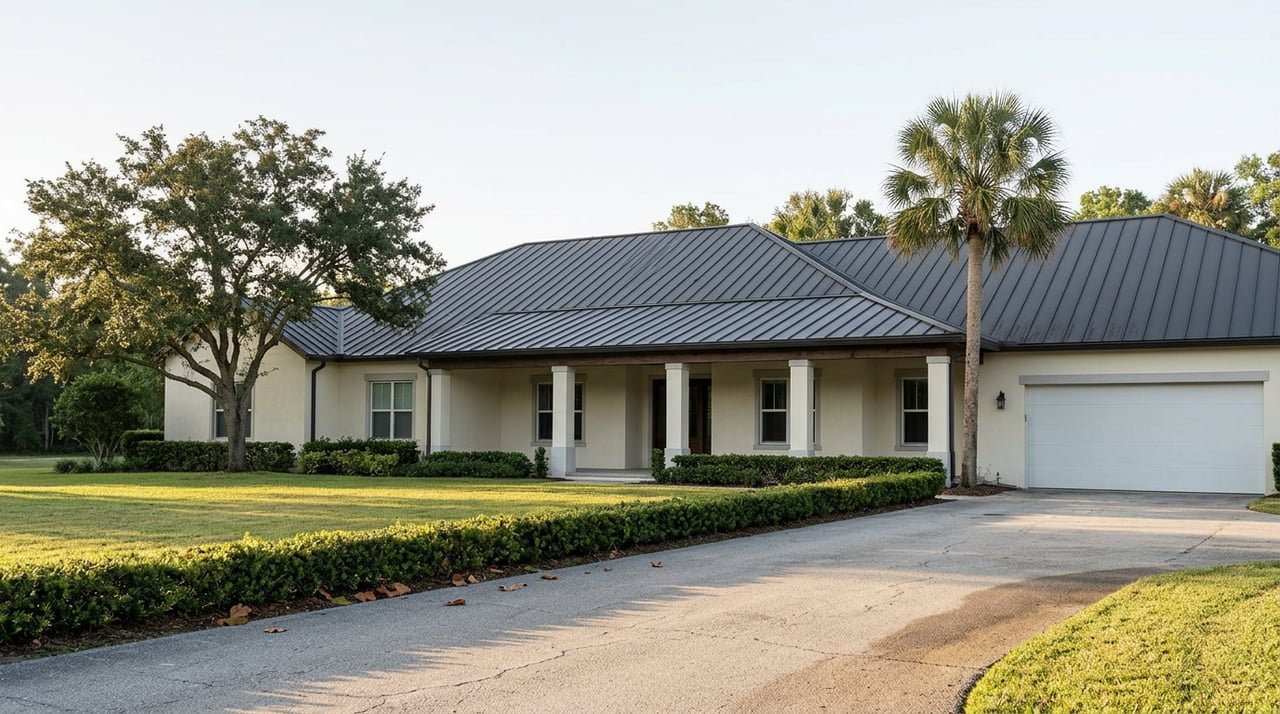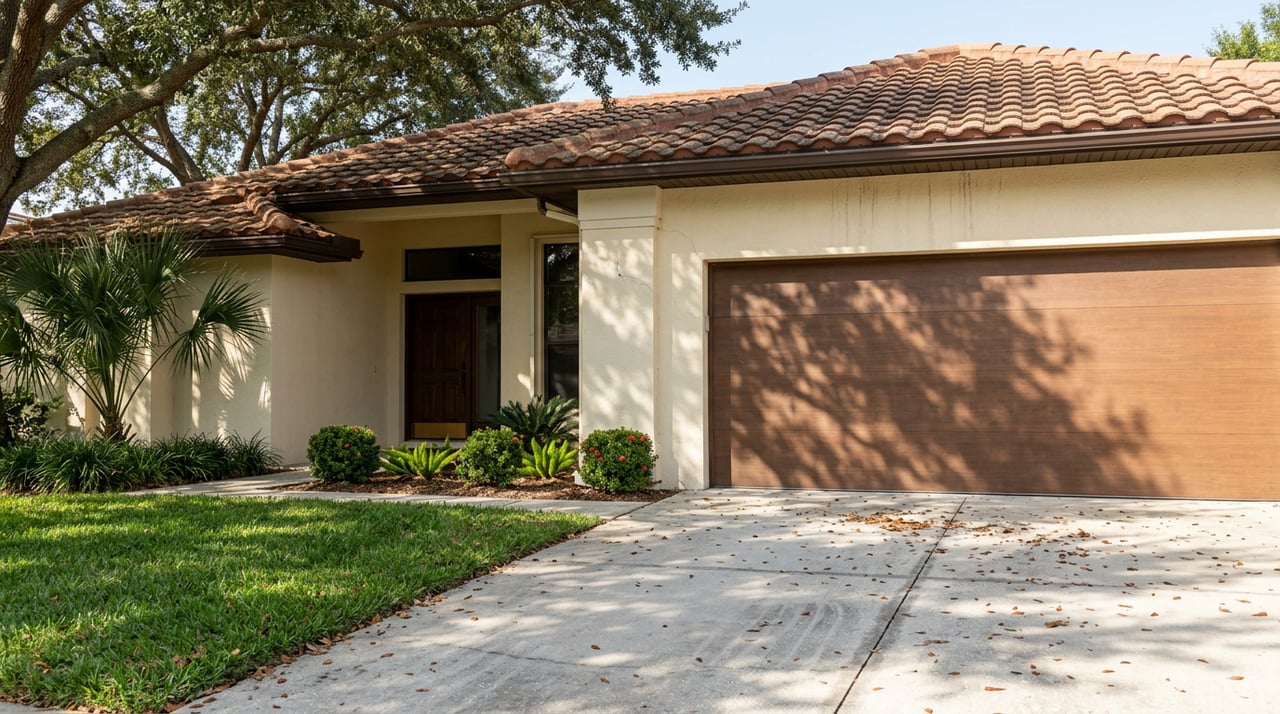
Two buyers walk into Royal Palm Beach this month with the same $500,000 pre-approval letter. One tours a three-bedroom resale on a quiet street in an established gated community, built in the early 2000s, HOA dues under $300 a month, no surprises left to discover. The other tours a brand-new two-story townhome ten minutes away, still smelling like fresh paint, priced almost identically, sitting inside a 200-acre growth corridor that spent part of the last year in bankruptcy court.
Same number on the pre-approval letter. Completely different transaction.
That is the part the median price does not tell you. Royal Palm Beach's median has been reported at $508,000 in February 2026 by one data provider, $514,995 in June 2026 by another, and $503,000 as a median list price in July 2026 by a third. Depending on which source you check, the village looks like it's appreciating, plateauing, or accelerating. All three can be true at once, because the median is an average of two markets that behave nothing alike: a 20-year-old resale stock with known histories, and a wave of new construction rising inside a growth corridor whose commercial anchor spent 2025 and part of 2026 tied up in Chapter 11.
If you're comparing Royal Palm Beach to other western suburbs right now, the number that matters isn't the median. It's which side of that split your $500,000 lands on.
The market moved faster in summer than the winter data suggested
Start with what the citywide numbers actually show once you line them up by date instead of treating them as one static figure.
In February 2026, homes in Royal Palm Beach sold for a median $508,000, up 5.1 percent year over year, at $263 per square foot, up 6.3 percent. Homes were taking a median 93 days to sell, slightly longer than the 89 days a year earlier, and 46 homes closed that month compared to 37 in February 2025.
By July 2026, the picture had shifted. Median list price sat at $503,000, price per square foot at $262, essentially flat from winter. But days on market had dropped to a median of 51, a 35 percent decline from July 2025. Something changed between February and July: buyers moved faster once spring inventory arrived, even though the price itself barely budged.
That's not noise. It's a market where price growth has slowed but absorption sped up, which usually means buyers are competing harder for a narrower band of listings rather than bidding prices broadly higher. As of early August 2026, roughly 270 properties were active across the village's 45 named communities, a mix of twelve non-gated single-family enclaves, seven condo buildings, eight gated communities, and one country club. That's not a lot of inventory spread across a lot of very different product types, which is exactly why the median flattens out real differences you'd notice the moment you started touring.
Four tiers, one median
Here's what actually sits inside that $500,000-ish figure, based on current listings and community-level data:
| Tier | Example communities | Typical price band | What you're buying |
|---|---|---|---|
| Condo entry point | Greenway Village and similar non-age-restricted buildings | $135,000 (1BR) to $375,000 (2-3BR) | Attached living, lake or canal views in some units, lower barrier to entry, HOA covers building maintenance |
| Established resale single-family | Village Walk, Breakers West, Counterpoint Estates | $460,000 to $675,000 | Mediterranean-style ranches, 3-4 bedrooms, mid-sized lots, decades of maintenance history to review |
| New construction, attached | Lakeside Landing (D.R. Horton) | $494,990 to $509,990 | Two-story townhomes, 1,446 to 1,532 square feet, 3 bed/2.5 bath, brand-new systems, HOA dues, no resale track record yet |
| Established gated, amenity-rich | Madison Green, Portosol | High $500s to low $800s (resale) | Golf course or resort-style amenities, 20-plus years of community operating history, HOA dues generally $200 to $300 a month |
Madison Green alone illustrates how much variation sits under one community name. Built between 2000 and 2004 across 11 independently gated subdivisions, it has more than 1,350 single-family homes spread across four builder collections, from Shelby Homes' Estates Collection to Minto's Legacy Collection, with square footage ranging from roughly 2,300 to more than 4,200. Portosol, a Minto-built community planned for 499 homes, charges HOA dues of $825 per quarter according to the community's own HOA site, a figure that covers wireless internet, basic cable, clubhouse staffing, and irrigation water pulled from the community's lakes.
The line worth noticing: a Lakeside Landing townhome and a Madison Green resale can list within a few thousand dollars of each other, despite one being roughly 1,500 square feet of attached new construction and the other being a 2,000-plus square foot detached home with two decades of operating history behind it. That's not a coincidence. It's what happens when new construction has to price competitively against an established resale market instead of commanding a clear premium for being new.
The corridor where new construction carries a different kind of risk
The reason that convergence matters more in Royal Palm Beach than in most suburbs right now traces back to a single 200-acre site at the corner of US 441 and Southern Boulevard, long marketed as Tuttle Royale.
Developer Brian Tuttle originally planned the site as a downtown-style village with roughly 1,600 apartment units, more than 700,000 square feet of retail and mixed-use space, a school site, a public park, and about 100 single-family homes. In September 2025, the entity controlling the commercial core, Main Street at Tuttle Royale LLC, filed for Chapter 11 bankruptcy after a Palm Beach County Circuit Court ruled it owed lender The Fuse Group roughly $47.8 million, a decision WPTV reported left residents uncertain about the project's future.
The bankruptcy court set up two possible outcomes: a sale to Los Angeles-based Concord Wilshire Capital, or a backup sale to Atlanta's Ardent Companies. Concord Wilshire closed on a $60 million acquisition of the 43-acre commercial parcel in April 2026, with plans for 401 multifamily residences, about 426,764 square feet of retail space, a 125-key hotel, and an approximately 82,875-square-foot office building.
That sounds like resolution. It isn't quite finished. In June 2026, the Village of Royal Palm Beach's own Village Manager, Ray Liggins, told the council that changing the land use and zoning on the site could take a couple of years, and that the new ownership group hadn't yet filed a formal application, according to the Town-Crier's coverage. No new name for the project had been confirmed as of that report.
Some residential product on the broader site is already built and occupied, including The Lynd Group's Villas at Tuttle Royale, 55 townhomes across 26 buildings, and Related Group's 392-unit Pointe at Southern. Those homes exist regardless of what happens with the retail and hotel phases next door. But newer single-family product marketed within that same growth corridor, including K. Hovnanian's Parkside at Tuttle Royale, is being sold in part on the promise of a walkable village that, as of this summer, is still a couple of years from a confirmed zoning application.
That's the friction a $500,000 buyer needs to weigh that a Madison Green or Portosol buyer simply doesn't. An established community's HOA history, amenity roster, and resale comps are already written. A growth corridor's amenity promises are still being litigated in a different sense.
Three questions worth asking before you write an offer near the corridor
If a home you're considering sits inside or near the Tuttle Royale footprint, ask these before you get emotionally attached to the floor plan:
- Which entity currently holds title to the surrounding commercial parcels, and have they filed any rezoning or site plan applications with the village yet.
- Whether the retail, hotel, and office entitlements approved under the original 2023 plan are still active or have lapsed since the ownership change.
- What completion timeline the builder is citing, in writing, for any shared roads, retail pads, or amenities referenced in the community's marketing materials.
None of these questions should scare you off a well-priced new home. They just move the decision from "trust the rendering" to "confirm the paperwork," which is the difference between buying into a plan and buying into a document.
What this means depending on what you're solving for
A first-time buyer stretching for a single-family home gets more predictability, dollar for dollar, from an established resale in Village Walk or Breakers West than from new construction priced in the same band. A move-up family that wants amenities and doesn't want golf course maintenance costs will find Portosol's roughly $275-a-month HOA more approachable than its reputation suggests. An investor or a buyer drawn specifically to the promise of future walkability needs to price in a multi-year timeline, not a marketing rendering.
For county-wide context, the median sale price across Palm Beach County ran $538,000 over the three months ending May 2026, which puts Royal Palm Beach's $508,000 to $515,000 range slightly under the broader county figure, not above it. That's worth knowing if you've been comparing portals across multiple cities and assuming Royal Palm Beach costs more than it does.
A few questions we get asked often
Does a stalled commercial phase hurt the value of homes already built nearby? There's no Royal Palm Beach-specific data tying the Tuttle Royale bankruptcy to resale values in the Villas at Tuttle Royale or Pointe at Southern. Those are completed, occupied communities. What's uncertain is the retail and hotel phase still years from a confirmed timeline, which is a separate bet from the home itself.
Is Royal Palm Beach still a relative value compared to the rest of the county? Based on the county-wide median of $538,000 for the three months ending May 2026 against Royal Palm Beach's roughly $508,000 to $515,000 range, yes, at least for now.
Do I need to budget for a high HOA fee if I want a gated community? Not necessarily. Portosol runs $825 per quarter, and Madison Green's dues generally fall between $200 and $300 a month. Gated doesn't automatically mean expensive in this village.
If you're weighing an established resale against new construction in Royal Palm Beach, or trying to figure out which of the village's 45 communities actually fits your budget and risk tolerance, that's exactly the kind of comparison we walk clients through before they write an offer. Take a look at our Royal Palm Beach neighborhood guide and our buyer's guide for the basics, then reach out to On Call Realty to schedule a free consultation. Chris Latchmansingh answers his own phone and can walk you through what a specific price point actually buys in this market, community by community.