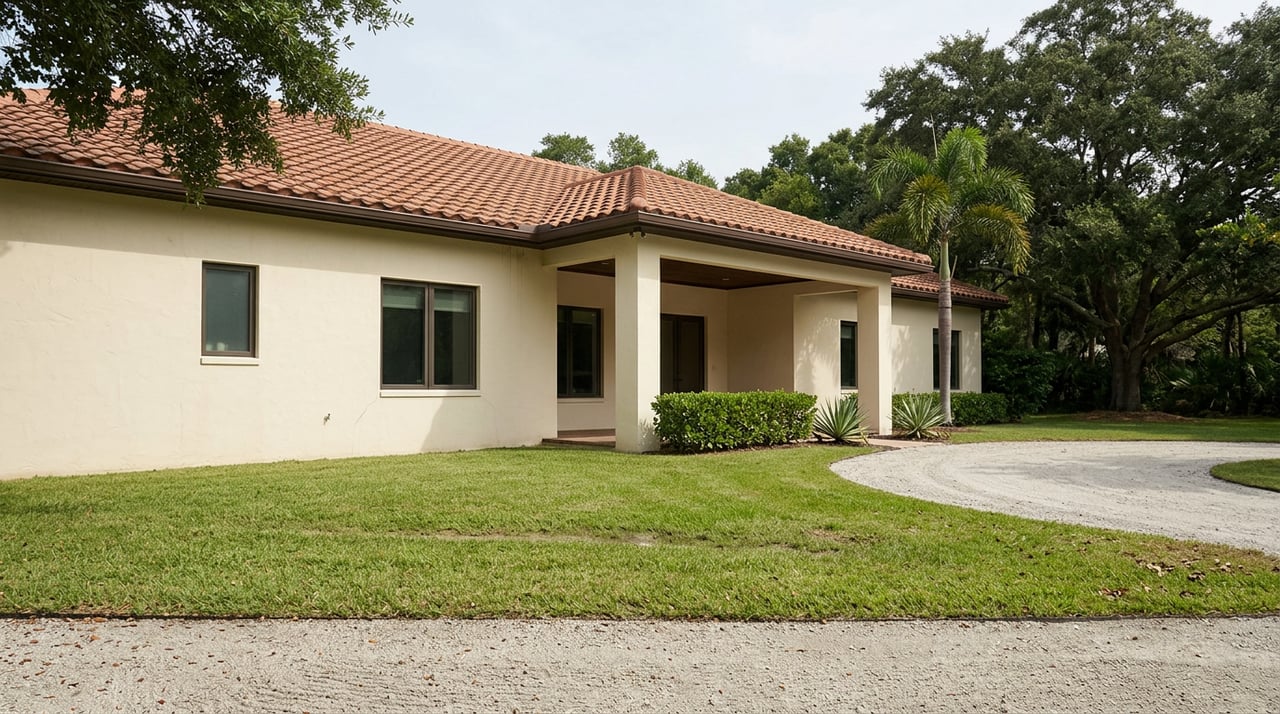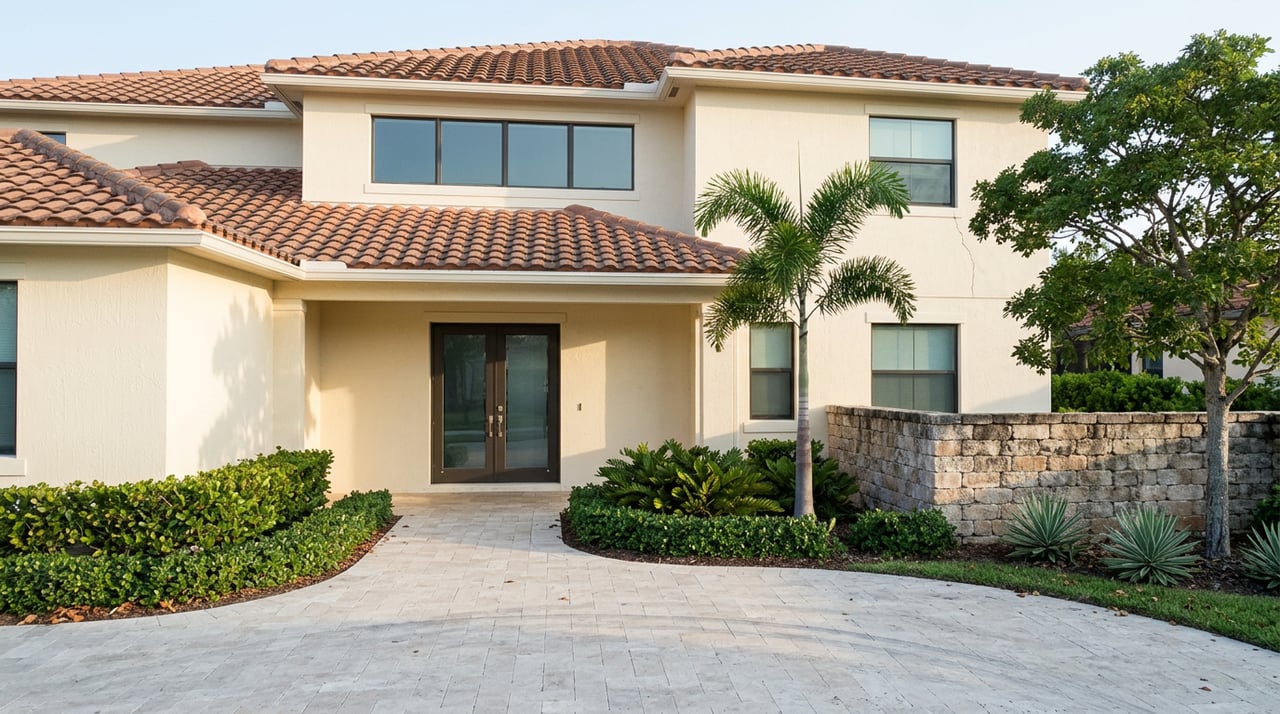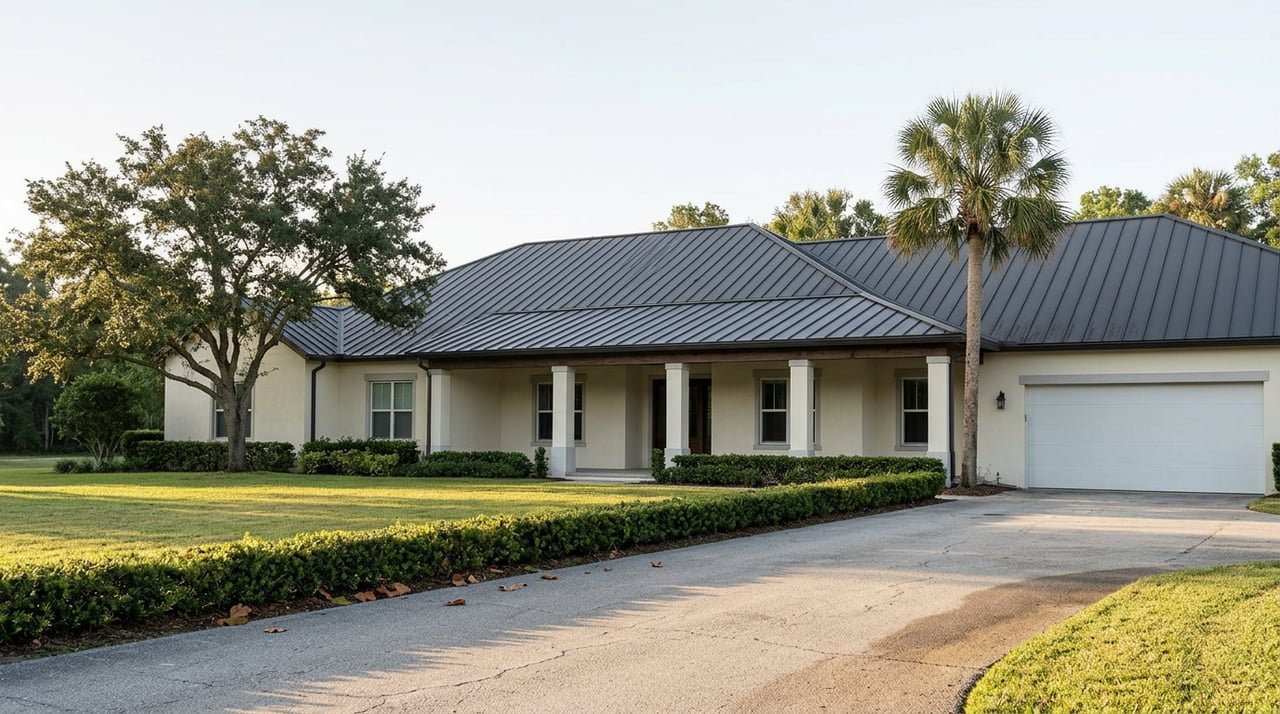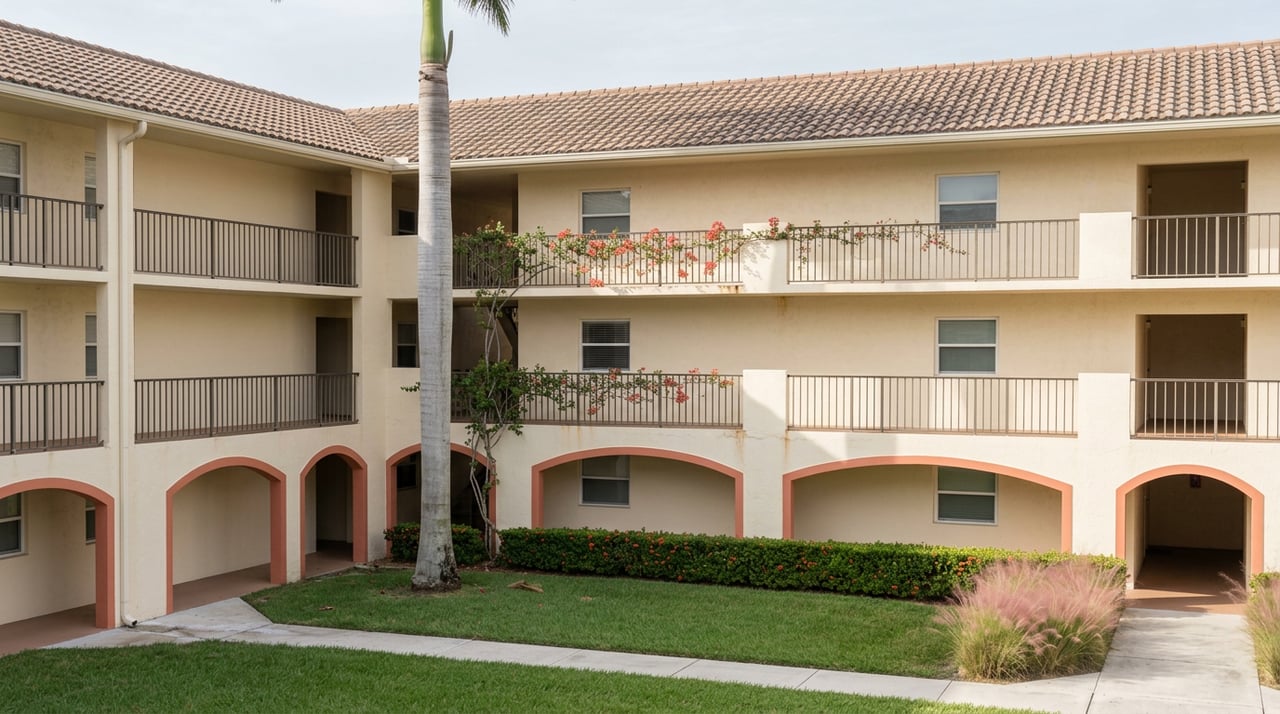
Two units went up for sale in Century Village this year, both two-bedroom, two-bath, both priced under $150,000, both inside the same gated perimeter off Okeechobee Boulevard. One listing led with a line agents don't usually need to write: "skip the milestone reports." The other quietly noted a new roof and confirmed there were no assessments pending. Same 55-plus community, same master HOA name on the sign out front, two completely different sets of rules attached to the deed.
The difference has nothing to do with the view, the renovation, or which decade the kitchen was updated. It comes down to how many floors are stacked on top of the unit.
What actually splits the community in half
Century Village at West Palm Beach was built out between the early 1970s and 1995 and holds roughly 6,500 condominium units spread across dozens of individual associations, all coordinated under one management structure. What most buyers don't realize when they start touring is that Florida's post-Surfside safety law only reaches buildings three stories or taller. Anything built as a one- or two-story structure sits outside the milestone inspection and Structural Integrity Reserve Study requirements entirely, at least under the law as it stands today.
That single threshold, written into Florida Statute 553.899 and 718.112, cuts straight through a community that looks uniform from the street. Sections built as low-rise two-story buildings never trigger a milestone inspection no matter how old they get. Sections like Dover, built with four floors and 64 units per building, do. Two neighbors who moved in the same year, paid similar prices, and share the same clubhouse can be living under entirely different legal obligations.
The organization that helps coordinate Century Village's roughly 300 individual condo associations has said as much directly to residents: buildings of one or two stories are not currently required to complete these inspections, while three-story-and-up buildings must.
The paperwork that comes with the taller buildings
For a building three stories or higher, the clock starts at 25 years of age if the building sits within three miles of the coast, or 30 years inland. A licensed engineer performs a visual inspection first. If that inspection turns up substantial structural deterioration, a more invasive second phase follows. Separately, every building three stories or taller must complete a Structural Integrity Reserve Study at least once every ten years, covering eight components that Florida law now treats as untouchable in the budget: roof, load-bearing walls and structural members, fire protection, plumbing, electrical systems, waterproofing, windows and exterior doors, and any other item carrying a deferred maintenance cost over $10,000.
Associations used to be able to vote to waive funding for those reserves and keep monthly dues artificially low. That option closed for any budget adopted on or after December 31, 2024. As of January 1, 2026, boards for qualifying buildings have to fund those reserves at the level the study calls for, full stop.
None of that applies to the two-story sections. They can still vote to waive or reduce reserves the way associations have for decades, because the law that forces the issue was never written to reach them.
Why 2026 is the year the split started showing up in listings
The reserve-waiver ban that took effect January 1, 2026 is likely why "no assessments" started appearing as a selling point in some Century Village listings and "skip the milestone reports" in others. Boards in the taller buildings are folding full reserve contributions into their budgets for the first time, and that money has to come from somewhere. Monthly assessments in those associations are the most likely place it shows up. Two-story sections face no equivalent mandate, so their dues have a lot less pressure pushing them upward on this specific front.
A second, more recent change compounds the gap. Fannie Mae and Freddie Mac retired their streamlined condo review process for most projects starting August 3, 2026, replacing it with a Full Project Review that digs into an association's reserves, insurance, and litigation history before a conventional loan can close. Buildings with 10 or fewer units still qualify for a waiver of that deeper review. A 64-unit, four-story building like the ones in Dover does not come close to that threshold. A buyer financing a unit in one of Century Village's taller associations is now underwriting the building almost as much as their own credit file, while a buyer in a small two-story section may pass through with far less friction.
Here's how the two tiers compare as of today:
| Two-story buildings | Three or four-story buildings | |
|---|---|---|
| Milestone inspection required | No | Yes, at 25 or 30 years depending on coastal distance |
| SIRS required | No | Yes, every 10 years |
| Reserve waiver still allowed | Yes | No, since Jan 1, 2026 |
| Fannie Mae Full Project Review (post-Aug 2026) | Often exempt if 10 units or fewer | Typically required |
| Listing language surfacing in 2026 | "No assessments," "skip the milestone reports" | "Reserves in progress," disclosed budget increases |
What to ask for before you compare two units side by side
Florida law already gives buyers the right to request an association's declaration, bylaws, budget, most recent financial statement, and either a milestone inspection summary or a written statement that none was required. For a Century Village purchase, the useful move is to request those documents building by building rather than assuming the master community's reputation tells you anything about your specific address. Ask for the reserve study or the written confirmation that one wasn't needed, the last two years of board meeting minutes for any mention of a pending special assessment, and the current operating budget so you can see whether reserve contributions have already started climbing.
If you're comparing a unit in a two-story building against one in a four-story building at a similar price, the paperwork you get back will look nothing alike, and that's the point. The lower price on the taller building's unit might reflect a rising monthly assessment the seller already knows about. The higher price on the two-story unit might reflect the fact that its board can still choose, every year, not to save for a roof it may not need to replace on anyone's forced schedule.
The disclosure side, for anyone selling
Florida's standard condominium contract rider already requires sellers to disclose special assessments that are levied, pending, or discussed in board minutes from the past 12 months. If you're listing a unit in one of the two-story sections, "no milestone report needed" is accurate, but it only works as a selling point if the buyer understands why. Buyers who don't know about the story-height exemption may assume every Century Village building carries this risk, and a plainly worded explanation in the listing does more for you than a generic disclaimer.
One thing worth watching
The exemption for one- and two-story buildings rests on the law as written today. Florida has already amended this framework twice since the original 2022 legislation, first through Senate Bill 154 and then House Bill 913, mostly to adjust deadlines and reporting requirements for the buildings the law already covered. Nothing currently on the table extends the requirement down to shorter buildings, but a framework that has changed twice in four years is not a framework to treat as permanent. Anyone buying into a two-story section on the assumption that it will never face these costs is making a bet on today's statute, not a guarantee.
A few questions worth asking before you write an offer
Does a two-story building in Century Village ever need a milestone inspection? Not under the law as it stands in 2026, regardless of the building's age. The three-story threshold is what triggers the requirement, not years in service.
If my building is two stories but sits inside an association that also manages taller buildings, does the exemption still apply? The requirement is assessed building by building. A two-story structure doesn't inherit the obligations of a taller building elsewhere in the same association unless state guidance changes that approach.
Are two-story sections immune from rising costs altogether? No. Insurance premiums and general inflation affect every building in Palm Beach County regardless of height. The exemption only removes the specific mandate to fund structural reserves and complete milestone inspections. Dues can still rise for other reasons.
Century Village is a good example of something true across Palm Beach County's older condo stock: the number on the sign out front tells you almost nothing about what you're actually buying into. If you're weighing a purchase or a sale inside Century Village, or comparing it against other West Palm Beach condo communities, On Call Realty can help you pull the building-specific paperwork before you write an offer, not after. Schedule a free consultation and we'll walk through what a specific building's documents actually say.