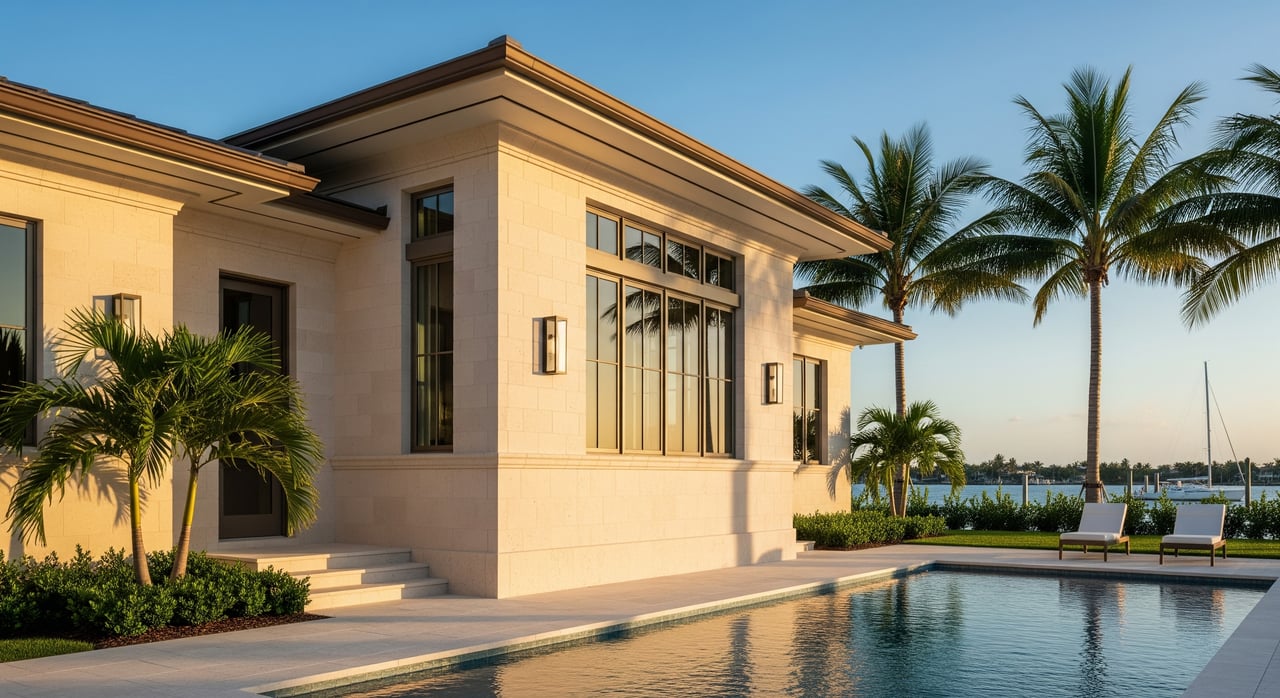
If you are scrolling West Palm Beach listings and keep seeing “CBS,” you are not alone. Many first-time Florida buyers ask what it means and why it matters. Understanding CBS can help you judge a home’s durability, insurance costs, and future maintenance before you make an offer. In this guide, you will learn what CBS construction is, why it is so common in Palm Beach County, and what to look for during showings and inspections. Let’s dive in.
What CBS construction means
CBS stands for concrete block and stucco. Most CBS homes in South Florida use concrete masonry units (CMU) for the exterior walls with a cement-based stucco finish on the outside. The block walls may include steel reinforcement and grout at key locations to meet wind and structural requirements.
Materials and typical assembly
A typical CBS wall uses an 8-inch concrete block, sometimes thicker, stacked and mortared. At structural points, builders add vertical steel rebar and fill block cores with grout to create reinforced columns. Bond beams and lintels at the top of walls and over openings tie the structure together. The stucco is a cement plaster applied in multiple coats or a one-coat cement system, finished with control joints, a weep screed at the base, and proper flashing around doors and windows.
Stucco vs EIFS
Traditional stucco is Portland-cement based and directly bonded to masonry or to metal lath. It is hard, vapor-permeable, and durable when detailed and maintained. Exterior Insulation and Finish Systems (EIFS) use insulation boards and synthetic coatings. EIFS behaves differently with moisture and movement than cement stucco. Most CBS homes in our area use cement stucco, not EIFS.
Storm performance is a system
CBS walls are just one part of a home’s wind and water defense. Roof-to-wall connections, roof covering, and opening protection (impact windows or shutters) all work together. A wind-resistant wall helps, but the whole system must meet Florida Building Code requirements to perform during storms.
Why CBS is common in West Palm Beach
Climate and hazard drivers
Palm Beach County faces hurricane winds, wind-driven rain, and year-round humidity. Masonry is noncombustible and resists impact better than many light-frame assemblies. Concrete block does not feed termites, which is useful in our climate. The wall’s mass can also help with sound and temperature swings.
History and economics
After World War II, Florida saw a building boom. Concrete block was fast to build, durable, and cost-competitive here. Local builders and trades became highly skilled with block and stucco, and supply chains kept costs reasonable. That history still shapes the market today.
Performance pros and limitations
Pros you may notice include noncombustible exterior walls, fewer termite targets in the walls, and good sound control. When reinforced and detailed to code, CMU walls perform well under high winds. Limitations include moisture risk if stucco or flashing details are missing or failing, potential corrosion of embedded steel in salty air, and the cost of retrofits like impact windows or structural repairs if needed.
What to check when buying a CBS home
Inspections to order
- General home inspection. Choose an inspector with experience in South Florida masonry and stucco.
- Moisture and stucco specialist. They can find delamination, hollow areas, cracks, staining, efflorescence, and hidden moisture with tools like infrared cameras or probes.
- Structural engineer. If you see notable wall cracking, spalling, or signs of settlement, a licensed engineer should assess reinforcement, bond beams, and load paths.
- Wind mitigation inspection. This Florida-specific report documents roof-to-wall connections, roof covering, and opening protection. Insurers use it for premium credits.
- Flood and elevation review. Check FEMA flood zone status and, where applicable, request an elevation certificate.
Visible red flags during a showing
- Horizontal or stair-step cracks near windows and doors. This can suggest movement or missing reinforcement.
- Hairline to larger stucco cracks at corners and roof lines. Small hairlines may be cosmetic; wider or diagonal cracks need a closer look.
- Hollow-sounding or bulging stucco. Tapping the surface can reveal delamination.
- Staining, white powdery deposits, or soft interior finishes near exterior walls. These are signs of water intrusion.
- Spalling concrete and exposed rusting rebar at beams or columns. Corrosion can reduce strength and will spread if not repaired.
- Missing or damaged flashing and no weep screed at the wall base.
Maintenance and repair budgeting
Plan for periodic stucco patching, sealing, and repainting. Budget to reseal window and door perimeters and to correct missing flashing. Corroded reinforcement repairs can involve cutting, treating, and patching concrete, and may require engineering. After major storms, check for new cracks, leaks, or window seal failures. Older homes may also need roof-to-wall strap upgrades if they predate modern code cycles.
Insurance and resale in Palm Beach County
Wind mitigation and flood
CBS can be viewed favorably for wind performance, but your premium depends more on the roof, opening protection, and flood exposure. Get insurance quotes early. Share the home’s age, roof details, presence of impact windows or shutters, and any prior wind mitigation report. If the property is in a flood zone, an elevation certificate and flood compliance history can affect cost and availability.
Resale expectations
Many South Florida buyers expect masonry and stucco. Condition drives value more than wall type. Clean stucco, proper flashing, documented repairs, and impact-rated openings can improve buyer confidence and shorten time on market later.
Energy and comfort in CBS homes
Insulation and upgrades
Concrete block offers thermal mass but has low insulation value unless you add it. Some homes have insulated block cores, insulated stucco systems, or interior insulation. Ask what is in the walls and attic. Energy upgrades can include interior wall insulation, better window glazing, and air sealing around penetrations to reduce moisture and improve comfort.
Local permits and resources checklist
- Verify permit history for stucco repairs, windows, roofs, or structural work with the City of West Palm Beach or Palm Beach County.
- Ask for the home’s wind mitigation report and any elevation certificate.
- Note the home’s age relative to Florida Building Code updates. Newer codes raise wind and water standards.
- Confirm contractor licensing for past work through state channels before relying on warranties or representations.
Quick buyer checklist
- Ask sellers for wind mitigation and elevation documents.
- Review the age of the home and any stucco remediation dates and warranties.
- Pull permit records for stucco, structural, roofing, and opening protection work.
- Order a general inspection, a stucco/moisture specialist review, and a wind mitigation inspection. Add a structural engineer if you see notable cracking or spalling.
- Confirm flashing, weep screeds, and perimeter sealant are present and intact at all openings.
- Check that utility penetrations through exterior walls are sealed.
- Get estimates for any needed repairs, from patching to full re-stucco or rebar repair.
- Obtain insurance quotes early and confirm if impact-rated windows or shutters are needed for better premiums.
When to pause or escalate
- Large areas of delaminated stucco or widespread moisture stains.
- Active spalling and rusting rebar at beams or columns.
- Repeated water intrusion or mold history without documentation of a solution.
- Signs of unpermitted structural changes or recurring repairs with no permits.
- No wind mitigation documentation, older roof connections, and difficulty getting insurance quotes tied to the exterior’s condition.
Buying a CBS home in West Palm Beach is a smart move when you understand the system and look at the details. With the right inspections, insurance planning, and maintenance budget, you can enjoy the durability and comfort CBS offers in our climate. If you want local guidance through showings, inspections, and the offer process, reach out. We provide hands-on buyer representation with senior-level attention on every file. Connect with Chris Latchmansingh to schedule a free consultation.
FAQs
What is CBS construction in Florida?
- CBS means concrete block walls with a cement-based stucco exterior, often reinforced with steel and grout at key locations.
Are CBS homes better for hurricanes in West Palm Beach?
- Properly reinforced CMU walls perform well in high winds, but overall storm resistance also depends on roof-to-wall connections and opening protection.
What inspections should I order for a CBS home?
- Get a general home inspection, a stucco/moisture specialist review, a wind mitigation inspection, and a structural engineer evaluation if you see notable cracking or spalling.
How does CBS affect homeowners insurance in Palm Beach County?
- CBS can help, but premiums hinge more on roof age and type, impact-rated openings, wind mitigation features, and flood zone status.
What are common stucco problems in South Florida?
- Cracking, delamination, missing flashing, staining and efflorescence, and spalling from corroded rebar are the main issues to investigate.
Do CBS homes have good energy efficiency?
- CMU provides thermal mass but low insulation, so ask about wall and attic insulation, window performance, and air sealing upgrades.
How do I verify permits for stucco or window work in West Palm Beach?
- Check records with the City of West Palm Beach or Palm Beach County building departments to confirm permitted and inspected repairs before you rely on them.