What does it really feel like to live in a place where horses shape the daily rhythm of the community? In Wellington, the equestrian scene is not just something you visit on a Saturday. It influences where activity is centered, how traffic moves, and even how many people use the trails and public spaces around town. If you are thinking about moving to Wellington, or simply want to understand how this lifestyle shows up in everyday life, this guide will help you picture it more clearly. Let’s dive in.
Wellington's horse culture is built in
Wellington’s equestrian identity is part of the village’s physical layout, not just its reputation. The village identifies the Equestrian Preserve Area as the official land use framework for this lifestyle, and it is regulated through the Equestrian Overlay Zoning District.
That area is concentrated in the western and southern parts of Wellington. It includes Wellington International, the National Polo Center, public and private bridle trails, equestrian farms, and related facilities. The village also says there are more than 580 farms serving polo, dressage, hunter/jumper, and recreational riders.
For you as a buyer, that matters because the equestrian lifestyle is not spread evenly across all of Wellington. Some parts of the village feel much more connected to horse activity, while others feel more removed from the center of that scene.
Seasonality shapes daily life
If you spend time in Wellington during winter, you will likely notice a bigger energy around the equestrian calendar. The village describes equestrian season as running from November through April.
Within that stretch, Wellington International identifies the Winter Equestrian Festival and the Adequan Global Dressage Festival as major draws from January through March. At the same time, competition at Equestrian Village continues from May through October, so the horse community remains active all year.
In practical terms, winter is the busiest and most visible season. The village says Wellington sees nearly 13,000 horses during peak season, and that kind of activity naturally affects the feel of the community.
The reach of the equestrian scene is also broad. Wellington International says it attracts participants from all 50 states and more than 34 countries, while the village reports that the equestrian community generates more than $160 million in annual economic impact for Palm Beach County.
Trails are part of the lifestyle
One of the clearest ways the equestrian scene becomes part of everyday life is through Wellington’s trail network. Village sources use different counts on different pages, so the safest way to describe it is simple: Wellington has an extensive trail network that supports recreation and equestrian use.
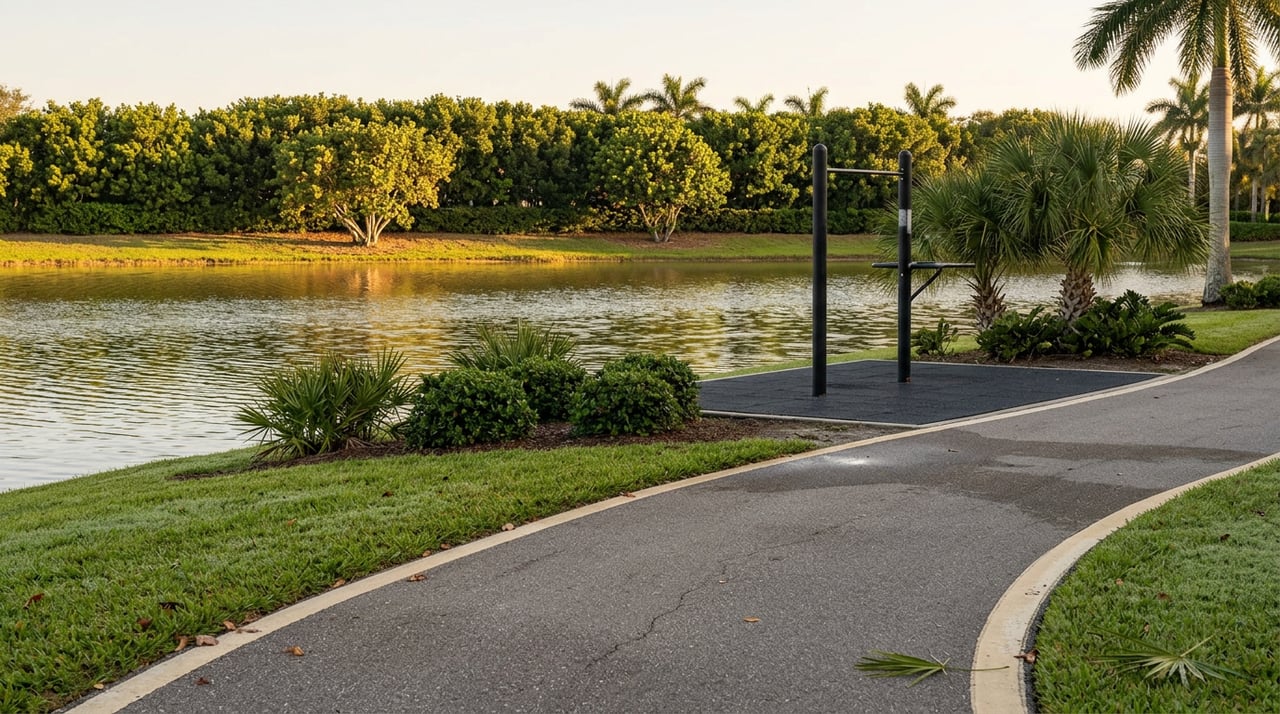
That network helps shape how people move through outdoor spaces. Depending on where you are in the village, trails may be used for walking, biking, running, transportation, or horse activity.
Even if you do not ride, this still affects your day-to-day experience. A community with visible trails and equestrian crossings tends to feel different from one built only around cars and standard suburban streets.
Environmental Preserve adds balance
The Wellington Environmental Preserve at the Marjory Stoneman Douglas Everglades Habitat shows how horse-country features mix with broader outdoor recreation. The preserve is a 410-acre rainwater storage area with no admission fee.
Its listed features include a boardwalk, butterfly garden, equestrian trail, learning areas, observation tower, restrooms, trellis, and walking trails. That combination makes it a practical example of how Wellington’s outdoor lifestyle can appeal to both riders and non-riders.
If your ideal day includes nature walks, open space, and a quieter setting, places like this may matter just as much as the show grounds.
Traffic follows event rhythms
In Wellington, traffic patterns are not shaped only by a normal work commute. They are also shaped by event schedules, venue traffic, and seasonal activity.
The village’s FY 2026 budget overview survey found that 68% of respondents prioritized traffic flow, road safety, and alternative transportation. In response, the budget includes turn lanes, traffic signals, the golf cart program, pedestrian paths and bicycle lanes, plus increased investment in equestrian trails and crossing projects.
That local planning context is helpful if you are deciding where to live. It shows that circulation and mobility are active concerns in a community where horses, events, and seasonal visitors are part of the daily mix.
Show days can feel different
Wellington International makes daytime horse shows easy for casual visitors because admission is free and parking is free for daytime shows. Saturday Night Lights is also free to attend, though onsite parking is $25 per car, with free off-site parking and a shuttle from Equestrian Village.
Hunter/jumper shows generally run Thursday through Sunday and are designed around mid-morning to afternoon viewing. That means the most noticeable traffic windows tend to cluster around show days rather than just standard rush hour patterns.
For some buyers, that energy is a plus. For others, it may be a reason to look a little farther from major venue corridors.
Dining and events go beyond riding
You do not need to own a horse to feel connected to Wellington’s equestrian culture. The local event scene makes that clear.
Wellington International says visitors can eat and shop onsite during the season. Its Saturday Night Lights program combines grand prix competition with food, live music, and family-oriented activities like face painting, petting zoos, pony rides, and carousel rides.
That changes the role of the equestrian scene. It becomes not only a sport setting, but also a social outing and recurring community activity.
Town Center adds another rhythm
Wellington’s weekly and public events also give residents a non-equestrian routine. Thursday Nights in Wellington at the Amphitheater runs weekly from 5:00 PM to 9:00 PM with 18 food trucks, more than 35 market vendors, and live music.
The Community Center in Town Center offers classes and programs for youth, adults, and seniors focused on arts, fitness, health and wellness, and community education. The Amphitheater is in the same complex and sits next to Scott’s Place Playground.
The broader parks system also adds variety. Village Park Athletics Complex, Wellington Green Park, South Shore Park, and several nature preserves help round out daily life between event weekends and peak show season.
What this means for buyers
If you are relocating to Wellington, the most useful question may not be whether you ride. The better question is whether you want to live in a community where horses influence the public rhythm.
For many buyers, that can be a real advantage. You may enjoy the seasonal buzz, access to trails, outdoor spaces, and the unique mix of sport and community events.
For others, the best fit may be a home that gives you access to Wellington’s amenities without placing you in the middle of the busiest corridors.
Where the horse lifestyle feels strongest
Based on the village’s land use descriptions and venue locations, buyers looking for the strongest equestrian atmosphere should pay close attention to the western and southern parts of Wellington. That is where the Equestrian Preserve Area and major horse venues are concentrated.
If you want to feel closer to farms, bridle trails, and the core horse community, those areas are likely to align better with your goals. This is especially relevant if lifestyle is a major part of your home search.
Where a quieter feel may fit better
If you like the idea of Wellington’s equestrian identity but want a little more separation from show traffic and event activity, areas farther from the main venue corridors and Town Center event zones may be worth exploring.
That does not mean giving up the Wellington lifestyle. It simply means choosing how close you want to be to the busiest parts of it.
Why local guidance matters
Wellington is a community where lifestyle and location are closely linked. Two homes in the same village can offer very different day-to-day experiences depending on their proximity to trails, venues, and seasonal activity centers.
That is why local guidance matters when you are buying, selling, or leasing in this part of Palm Beach County. You want someone who can help you look beyond square footage and price and think through how the location will actually feel once you live there.
If you want help finding the right fit in Wellington or nearby western Palm Beach County communities, reach out to Chris Latchmansingh for a free consultation.
FAQs
How does Wellington’s equestrian scene affect everyday life?
- Wellington’s equestrian scene affects everyday life through seasonal activity, event-driven traffic, trail access, outdoor recreation, and community events tied to horse venues.
Which parts of Wellington feel most connected to horse culture?
- The western and southern parts of Wellington feel most connected to horse culture because the Equestrian Preserve Area and major equestrian venues are concentrated there.
Is Wellington only active during equestrian season?
- No. Winter is the busiest and most visible period, but Wellington International says competition continues at Equestrian Village from May through October, so horse activity remains part of the area year-round.
Can non-riders still enjoy Wellington’s equestrian lifestyle?
- Yes. Non-riders can still enjoy the lifestyle through public events, dining, shopping, trails, preserves, and spectator-friendly horse shows.
What should Wellington homebuyers consider about traffic?
- Wellington homebuyers should consider that traffic can feel seasonal and event-driven, especially near major venue corridors and on show days from Thursday through Sunday.
Are Wellington trails only for horses?
- No. Village sources describe an extensive trail network used for recreation, exercise, transportation, hiking, biking, running, and equestrian activity.